
DYK # 43: Did you know… clarity is king.
In last month’s DYK # 42, we explored the challenges CX faces today. We explored the detrimental impact silo thinking has on the customer journey, and how a lack of clarity around what CX is, and who’s responsible, destroys even the best intended experiences.
Today, in DYK # 43, we offer guidance to create clarity, and build the foundations for alignment and shared language within your organisations, to set the groundwork for CX to thrive.
This month offers a sneak peak into Chapter 2 of our upcoming book CXTS™ - Customer Experience is a Team Sport. It sets the scene to create the foundation needed to get everyone in your organisation bought into the idea that we’re all in the same boat together, since every single department directly or indirectly impacts the customer experience.
The question is: If everyone plays a part in delivering and shaping customer experience, (how) do you manage that across your entire organisation?
Let's unpack this.
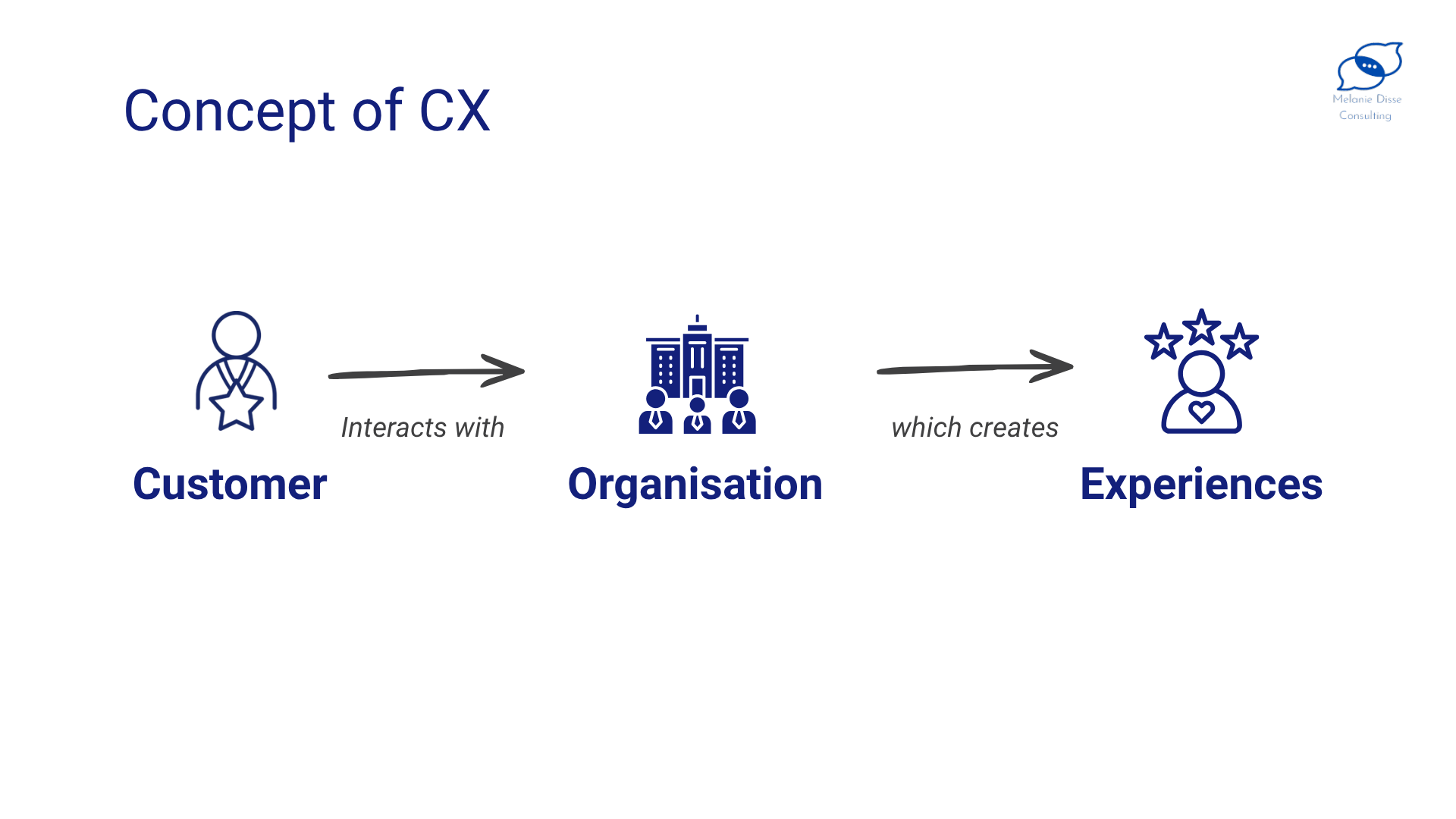
Every time a customer interacts with your organisation (products, services, people, digital channels, etc.), it creates an experience. That is the concept layer of CX, and the part most people understand. It is also what most people refer to or think of as “CX”.
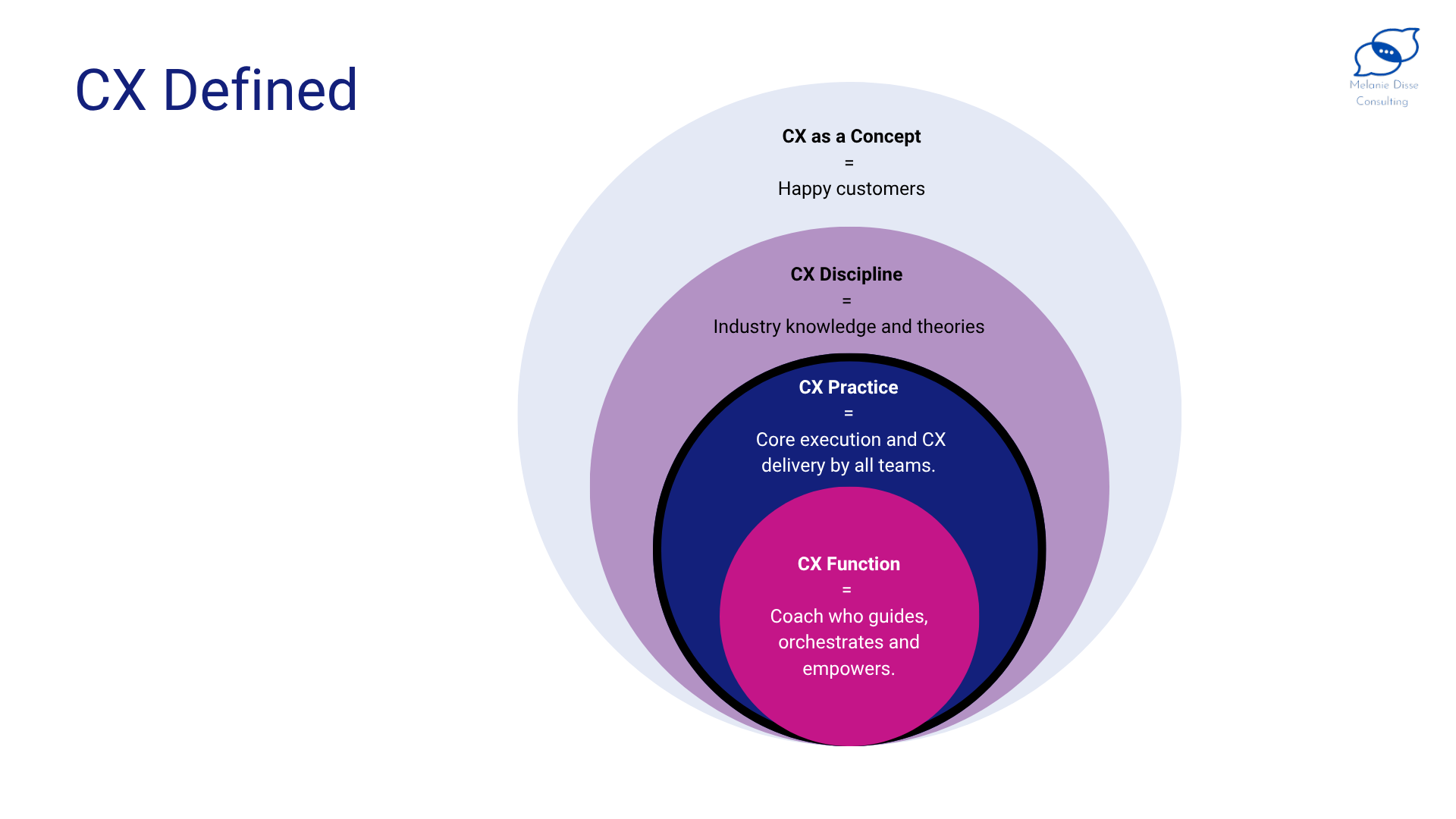
CX as a Concept refers to the customer’s overall experience.
As an organisation you should aim towards creating those experiences in a way that leads to “happy customers”.
Then there's the business discipline of CX. The CX business discipline is the theory and industry knowledge base. This typically sits outside your organisation, at industry level. Think of the CXPA or CX thought leaders developing and evolving CX methods, models, and best practices at industry level.
When it comes to your organisation, and how we deliver and design experience for customers, we must look into two more “layers” of CX though. The CX function and the CX practice.
The CX function is the business unit named “CX”, or your CX department. The function is the organisational unit that orchestrates and governs how knowledge and capabilities are used and applied. The CX function exists to enable, coach and empower all other business units within an organisation. Think of this as your CX coach - check out DYK # 36 to learn more.
However, if CX is perceived to be everyone's job, since every single department directly or indirectly impacts the experiences customers have with you, then why do we need a CX team? And how is it a team sport if we have a CX department?
That's where the CX practice comes in. The CX practice spans your entire organisation, it’s how everyone delivers CX in their daily work (Team Sport!). The practice is the application of knowledge and capabilities to the day-to-day delivery and execution of CX, within all business units across an organisation.
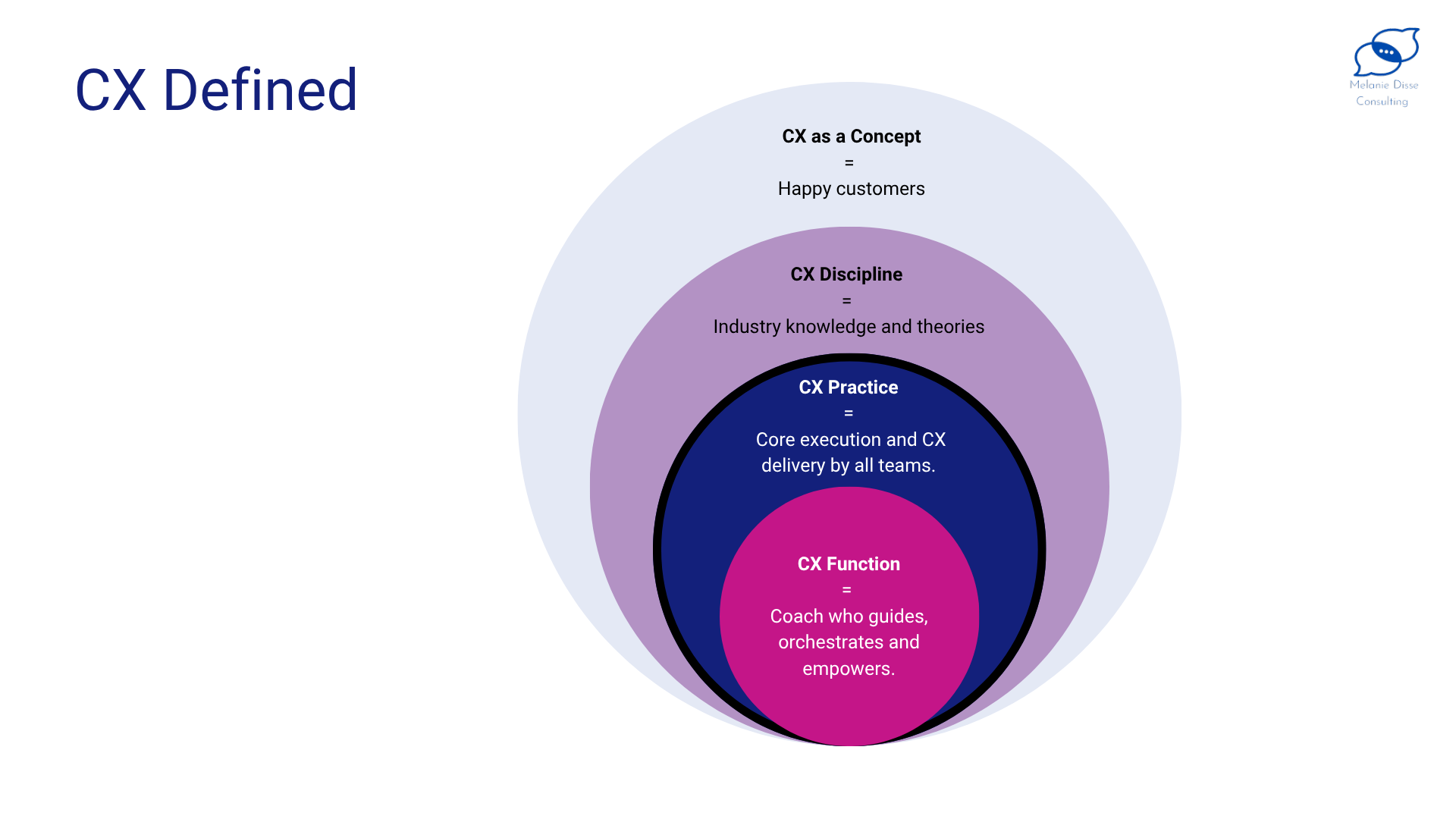
Defining CX for your organisation is key to building understanding, creating a shared language and gaining buy-in for a collaborative operating model.
Let’s clarify how the CX practice and the CX function work together.
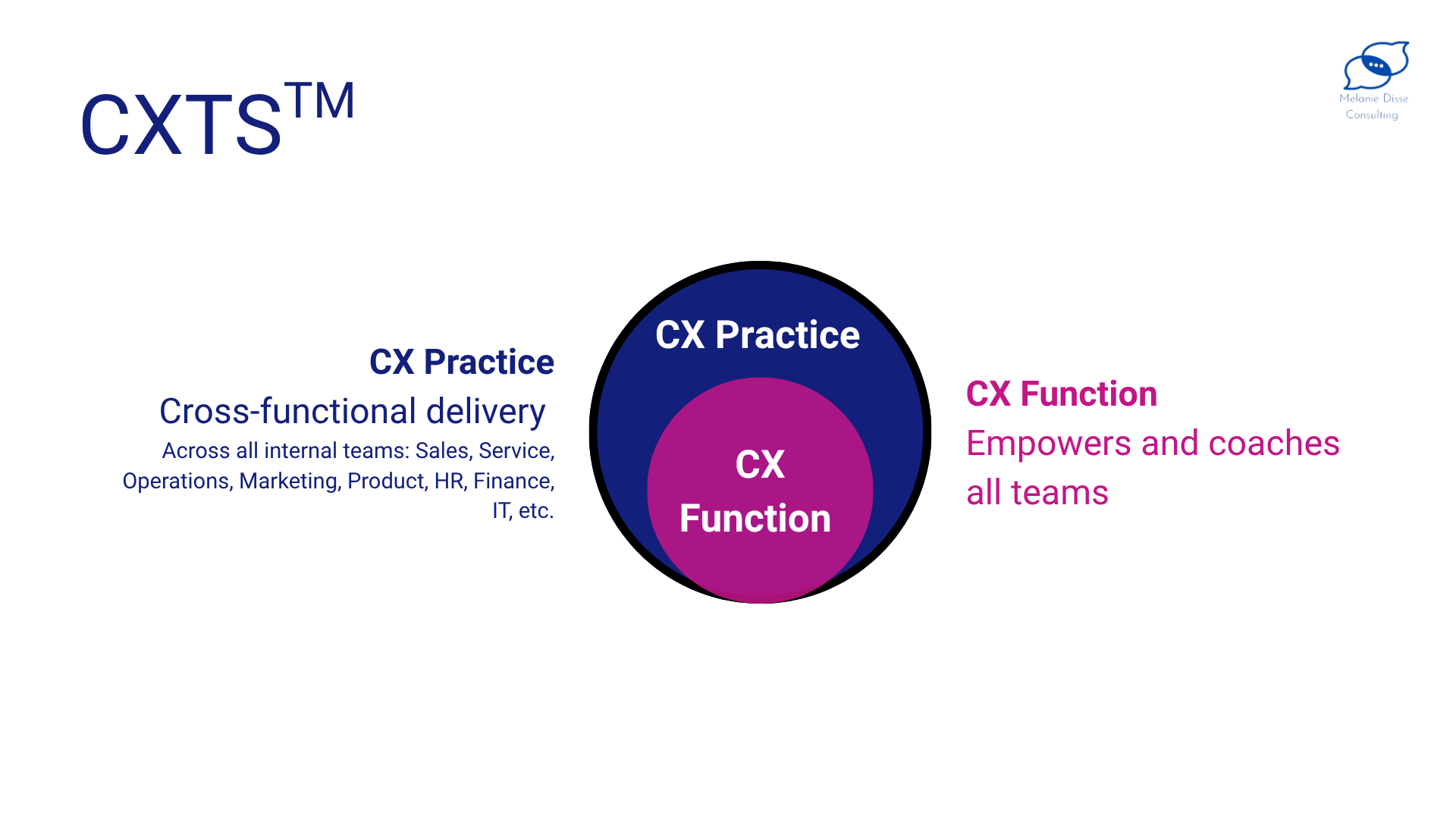
Your CX function is part of the CX practice, but unlike all other business units, the CX function isn't part of your CX delivery engine; it's your coach.
Creating clarity on the different layers of CX, and establishing a shared language goes a long way in enabling CX success for your organisation. Yet, it seems to be a foundational step often neglected or missed by organisations.
Whether you're in the midst of your CX strategy, rethinking or restructuring your “CX department”, or simply trying to build a solid foundation grounded in clarity and shared accountability, the CXTS™ framework provides you with the clarity you need.
If you'd like to learn more about the CXTS™ framework and our CXTS™ operating model, get in touch for a chat. And stay tuned as we'll release more updates, followed by the launch of our book CXTS™ - Customer Experience is a Team Sport.
Want to be the first to know when CXTS™ - Customer Experience is a Team Sport becomes available? Register your interest here and we’ll keep you up to date.
#CXTS #CX #customerexperience #CXoperatingmodel